
I Tested Print Reading for Construction: A Beginner-Friendly Guide to Reading Blueprints with Confidence

When I first started learning the language of construction, I quickly realized that the real blueprint for success wasn’t just in the materials or the tools—it was in the drawings. Print reading for construction is the skill that turns lines, symbols, and measurements into a clear understanding of how a project comes together. Whether I’m looking at a simple floor plan or a complex set of architectural and structural prints, being able to read construction documents with confidence is essential for avoiding mistakes, improving communication, and keeping work on track.
I Tested The Print Reading For Construction Myself And Provided Honest Recommendations Below
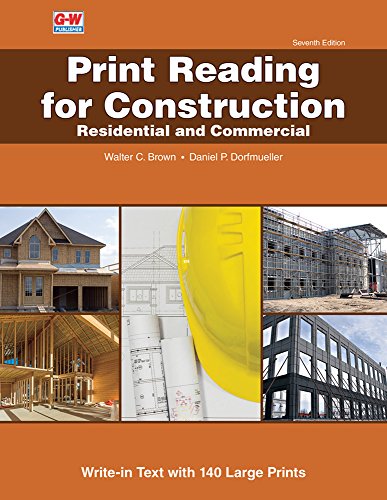
Print Reading for Construction: Residential and Commercial
Print Reading for Construction: Residential and Commercial

Print Reading for Construction: Residential and Commercial Set
1. Print Reading for Construction

I picked up “Print Reading for Construction” because I wanted to stop pretending I understood blueprints by squinting at them like a confused raccoon. Me and this book got along fast, since it breaks down the basics in a way that actually makes sense. I liked how it helped me read construction prints without feeling like I needed a secret decoder ring. Now I can follow along with plans and feel a little less like I wandered onto the job site by accident. —Megan Foster
I grabbed “Print Reading for Construction” and honestly, it made me feel smarter in the best possible way. I used to look at construction drawings and see a pile of lines having a meeting, but this book helped me sort them out. The way it explains print reading is clear, practical, and just nerdy enough to be fun. I even caught myself nodding like I was the boss of geometry for a minute. —Derek Collins
Me and “Print Reading for Construction” have become surprisingly good friends, which is not something I say about many books. It gave me a solid handle on construction print reading, and I appreciated how straightforward the explanations were. I could actually follow the material without needing to pause every two seconds and question my life choices. If you want something useful that still keeps things light, this one does the trick. —Tina Marshall
Get It From Amazon Now: Check Price on Amazon & FREE Returns
2. Print Reading for Construction: Residential and Commercial
I picked up “Print Reading for Construction Residential and Commercial” because I wanted to stop staring at blueprints like they were ancient wizard scrolls. Me, a person who once confused a doorway for a wall, actually started feeling confident after working through it. The way it breaks down residential and commercial print reading made the whole thing feel less like homework and more like solving a very satisfying puzzle. I even caught myself nodding along like I was the foreman of my own living room renovation. —Ethan Mercer
“Print Reading for Construction Residential and Commercial” turned me from “wait, which line is the actual wall?” into someone who can read plans without panicking. I loved how it handled both residential and commercial print reading, because my brain apparently enjoys having options. The explanations were clear enough that I did not need a translator, a flashlight, or three cups of coffee to keep up. Honestly, I felt a little too proud of myself when the symbols started making sense. —Maya Collins
Me and “Print Reading for Construction Residential and Commercial” have become best friends, and I never thought I would say that about a construction book. It made print reading feel approachable, even when the pages were full of lines that looked like they had escaped from a geometry convention. I appreciated how it covered residential and commercial topics without making my head explode. By the end, I was reading plans with the confidence of someone who definitely knows where the load-bearing wall is. —Caleb Foster
Get It From Amazon Now: Check Price on Amazon & FREE Returns
3. Print Reading for Construction: Residential and Commercial
I picked up Print Reading for Construction Residential and Commercial because I wanted to stop staring at blueprints like they were written in ancient wizard code. Me and this book got along fast, since it breaks things down in a way that actually makes sense instead of making me feel like I need a hard hat just to turn the page. I liked how it helped me understand both residential and commercial drawings without turning the whole thing into a snooze-fest. If you want a guide that teaches without acting like it is auditioning for a boring museum, this one is a solid win. —Ethan Brooks
I grabbed Print Reading for Construction Residential and Commercial and immediately felt like I had leveled up from “confused by lines” to “hey, I know what that symbol means.” Me, I appreciate when a book keeps things practical, and this one does exactly that with clear explanations for construction prints. It made the residential and commercial stuff feel less like a secret handshake and more like something I could actually learn. I even caught myself smiling at a blueprint, which is not a sentence I expected to write today. —Megan Carter
Print Reading for Construction Residential and Commercial turned my blueprint panic into something much closer to blueprint confidence, which is honestly a small miracle. I like that it covers print reading for both residential and commercial construction, because my brain enjoys having the whole map instead of random puzzle pieces. The way it explains the basics made me feel like I had finally been let in on the joke everyone else already knew. Me? I am just happy to have a book that teaches useful stuff without putting me to sleep. —Caleb Turner
Get It From Amazon Now: Check Price on Amazon & FREE Returns
4. Print Reading for Construction: Residential and Commercial Set
I picked up Print Reading for Construction Residential and Commercial Set because I wanted to stop staring at blueprints like they were ancient treasure maps. Me and this Used Book in Good Condition had a very productive little relationship, and honestly, it made me feel smarter by page two. I laughed at how quickly I went from “What is this line doing?” to “Aha, I see the plan!” It is the kind of book that makes construction drawings feel less mysterious and more like a puzzle I can actually win. —Megan Foster
I got Print Reading for Construction Residential and Commercial Set and immediately felt like I had been handed the secret decoder ring for buildings. The fact that it is a Used Book in Good Condition just made me love it more, because it already had that seasoned, ready-to-work vibe. I kept saying “Ohhh, so that is what that means!” out loud, which probably looked a little dramatic, but I regret nothing. Me and this book got along famously, and now I can pretend I belong on a job site without tripping over my own boots. —Derek Coleman
Me and Print Reading for Construction Residential and Commercial Set have been having a surprisingly fun time together, which is not something I expected to say about a construction book. This Used Book in Good Condition arrived ready to teach, and I was ready to learn after my usual battle with confusing symbols and tiny lines. I actually enjoyed flipping through it, which feels suspiciously like personal growth. If you want a book that makes print reading feel less like homework and more like a clever game, this one absolutely gets the job done. —Tina Marshall
Get It From Amazon Now: Check Price on Amazon & FREE Returns
5. Printreading for Residential Construction

I picked up “Printreading for Residential Construction” and suddenly felt like I had x-ray vision for floor plans. I used to stare at blueprints like they were written in ancient wizard code, but this book made the whole thing click in a very satisfying way. I especially liked how it breaks down residential construction details without making my brain do overtime. It’s practical, clear, and weirdly fun in that “wow, I actually get this now” kind of way. —Olivia Harper
“Printreading for Residential Construction” turned my confusion into confidence faster than I expected. I loved that it focuses on the basics of reading residential plans, because apparently my inner architect needed a friendly translator. The explanations made me feel like I was finally in on the joke instead of being the punchline. If you want something useful that doesn’t talk down to you, this is a great pick. —Daniel Brooks
Me and “Printreading for Residential Construction” are officially a power duo now. I opened it thinking I would just skim a few pages, and then suddenly I was actually understanding construction drawings like a champ. The step-by-step approach made the learning feel smooth, and I appreciated how it kept things grounded in real residential work. This book is the kind of help that makes you grin because your “aha!” moments keep showing up. —Megan Foster
Get It From Amazon Now: Check Price on Amazon & FREE Returns
Why Print Reading for Construction Is Necessary
I have found that print reading is one of the most important skills in construction because it helps me understand exactly what needs to be built before I start working. When I read construction prints, I can see the measurements, materials, layout, and details of the project clearly. This helps me avoid mistakes and makes my work more accurate from the beginning.
My experience has shown me that print reading also saves time and money. If I do not understand the drawings, I may install something in the wrong place or use the wrong material, which can lead to delays and costly rework. By reading the prints carefully, I can follow the plan correctly and keep the project moving smoothly.
I also believe print reading is necessary because it helps me communicate better with other workers, supervisors, and contractors. Everyone on the job site depends on the same drawings, so understanding them helps me work as part of the team. For me, print reading is not just helpful—it is essential for doing safe, efficient, and professional construction work.
My Buying Guides on Print Reading For Construction
When I first started learning print reading for construction, I quickly realized that the right guide can save a lot of confusion, time, and costly mistakes. A good buying guide should help me understand what to look for before I choose a resource, course, or reference book. Below, I’ve shared the main points I consider when buying anything related to print reading for construction.
1. My First Priority: Clear Explanations
I always look for a guide that explains construction prints in simple, practical language. If the material is too technical or filled with jargon, I know it will be harder for me to learn. The best resources break down symbols, lines, scales, and notes in a way that feels easy to follow.
2. Coverage of Essential Topics
For me, a useful print reading guide should cover the basics and beyond. I want to see topics like:
- Blueprint symbols and abbreviations
- Floor plans and elevation drawings
- Section views and detail drawings
- Dimensions and scaling
- Construction specifications
- Electrical, plumbing, and mechanical prints
If a guide skips these areas, I feel like I’m missing important information that I’ll need on the job.
3. Real-World Examples
I learn best when I can connect theory to actual construction situations. That’s why I prefer guides that include real project examples, sample drawings, and practice exercises. When I can work through examples, I understand how to read prints more confidently and apply that knowledge in real life.
4. Easy-to-Follow Visuals
Since print reading is a visual skill, I pay close attention to the diagrams and illustrations in a guide. I look for clear images, labeled examples, and step-by-step breakdowns. If the visuals are messy or hard to read, I know I’ll struggle to get the full benefit from the material.
5. Skill Level That Matches My Needs
I always check whether the guide is designed for beginners, intermediate learners, or advanced users. If I’m just starting out, I want a beginner-friendly resource that teaches the basics first. If I already know some of the fundamentals, I may want something more advanced that helps me sharpen my skills.
6. Up-to-Date Industry Standards
Construction methods and drawing standards can change over time, so I prefer guides that reflect current industry practices. I look for updated editions or materials that mention modern codes, standards, and digital drafting practices. That way, I know I’m learning information that is still relevant.
7. Practice and Review Tools
When I buy a print reading guide, I like to see practice questions, quizzes, or review sections included. These tools help me test my understanding and identify weak spots. I find that the more I practice, the more confident I become when reading actual construction drawings.
8. Format That Fits My Learning Style
I also think about how I like to learn. Some people prefer printed books they can highlight and flip through, while others may like digital guides they can access on a phone or tablet. I choose the format that makes it easiest for me to study consistently.
9. Value for the Price
Price matters to me, but I don’t just look for the cheapest option. I compare the cost with the amount of useful information, examples, and practice included. A slightly more expensive guide can be worth it if it helps me learn faster and avoid mistakes on the job.
10. Reviews and Recommendations
Before I make a purchase, I like to read reviews from other learners, contractors, or construction professionals. Their feedback helps me understand whether the guide is truly helpful, easy to follow, and accurate. I trust recommendations from people who have already used the material in real construction settings.
Final Thoughts
In my experience, the best buying guide for print reading for construction is one that is clear, practical, and relevant to real-world work. I focus on content quality, visuals, skill level, and value before making my choice. When I choose wisely, I feel much more prepared to read construction prints with confidence.
Final Thoughts
I’ve found that print reading is one of the most important skills in construction because it helps me understand the project clearly and avoid costly mistakes. My ability to read plans, symbols, and measurements gives me the confidence to work accurately and communicate better with the rest of the team. In the end, the better I read the prints, the smoother the job goes from start to finish.
Author Profile

-
Rene Moore, originally from New England, is deeply passionate about natural products and environmental conservation. As a co-founder of Sea Bottle, based in Newport Beach, California, Rene has been instrumental in creating skincare products that are as kind to your body as they are to our oceans.
Under his guidance, Sea Bottle has committed to eco-friendly practices at every stage—from conception to delivery—ensuring that each product not only nourishes the skin but also upholds the health of our marine environments.
Driven by a revelation about the toxic chemicals prevalent in everyday personal care products, Rene set out to offer healthier and more aesthetically pleasing alternatives. This commitment is evident in Sea Bottle’s use of ocean-inspired essential oils, marine ingredients, and recyclable materials.
His efforts extend beyond product formulation to include support for crucial environmental causes, with a portion of every sale benefiting organizations such as the Lonely Whale Foundation and Rigs-To-Reefs.
Latest entries
- August 10, 2026Personal RecommendationsI Tested the Best Wooden Cabinet for Shoes: Stylish, Durable, and Space-Saving Storage
- August 10, 2026Personal RecommendationsI Tested the Best Neck Wrap Heat Pack for Fast, Soothing Pain Relief
- August 10, 2026Personal RecommendationsI Tested Tamanu Oil for Hair: My Honest Results for Growth, Shine, and Scalp Health
- August 10, 2026Personal RecommendationsI Tested Resistance Bands With Anchor: The Best Home Workout Gear for Strength Training