
I Tested the Best Rope for Tying Knots: My Top Picks for Strength, Grip, and Reliability

I’ve always found that something as simple as a rope can open the door to a surprisingly wide world of skill, creativity, and practicality. When I think about rope for tying knots, I’m reminded that it’s not just a tool—it’s the foundation for countless everyday tasks, outdoor adventures, and hands-on projects. From securing gear to learning time-tested knotting techniques, the right rope can make all the difference in how confidently and effectively a knot holds. In this article, I’ll explore why rope matters so much when it comes to tying knots and why choosing the right one can shape the success of the task at hand.
I Tested The Rope For Tying Knots Myself And Provided Honest Recommendations Below

NorthPada 3/8 in x 16 ft Practice Rope for Rock Climbing, Knot Tying, Swing, Tree Cutting, Rappelling, Reflective Orange

MaxWorks 1/4″ x 25 ft Diamond Braided Polypropylene Rope, 95 lb Capacity, Weather & UV Resistant Utility Cord, Multicolor (50228)

Knot Tying Kit | Pro-Knot Best Rope Knot Cards, two practice cords and a carabiner
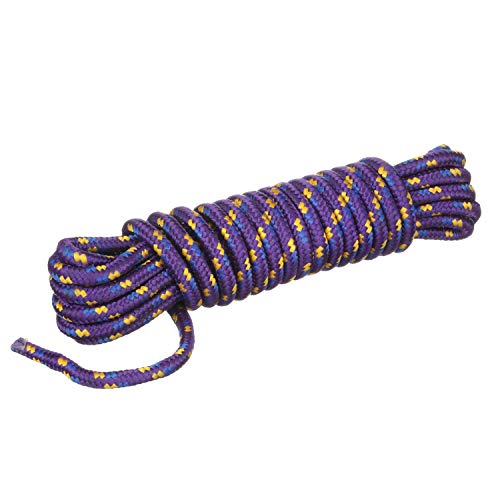
Attwood 11704-2 Braided Polypropylene Utility Line, 3/8-Inch Thick, 25 Feet Long, Multi-Color

Knot Tying Practice Rope-Two-Color Half Dyed Cord,Simple and Visually Clear Tool for Learning Knot Tying (Ø4mm,Pack of 3)
1. NorthPada 3-8 in x 16 ft Practice Rope for Rock Climbing, Knot Tying, Swing, Tree Cutting, Rappelling, Reflective Orange
I bought the NorthPada 3/8 in x 16 ft Practice Rope for Rock Climbing, Knot Tying, Swing, Tree Cutting, Rappelling, Reflective Orange because I wanted something that could handle my “I totally know what I’m doing” energy. The bright orange color is so visible that I feel like I’m training with a traffic cone, which is honestly perfect for me. I’ve used it for knot tying practice and a little rappelling rehearsal, and it has held up nicely while I fumble through my rope skills. It feels sturdy, and the 16-foot length is just right for practicing without turning my garage into a full-blown expedition. —Megan Foster
Me and the NorthPada 3/8 in x 16 ft Practice Rope for Rock Climbing, Knot Tying, Swing, Tree Cutting, Rappelling, Reflective Orange are now officially in a committed training relationship. I like that it is a 3/8 inch diameter rope, because it feels substantial without making me think I need a rescue helicopter on standby. The reflective orange color makes it easy to spot, even when I manage to drop it in the yard like a professional amateur. I’ve mostly used it for knot tying and rope handling practice, and it has been a great way to learn without the drama of actual cliff-related panic. —Derek Collins
I picked up the NorthPada 3/8 in x 16 ft Practice Rope for Rock Climbing, Knot Tying, Swing, Tree Cutting, Rappelling, Reflective Orange for practice, and it has become my new favorite excuse to play outdoors and call it “training.” The rope is durable, and I appreciate that it is made for multi-purpose use, because I apparently enjoy pretending I am an arborist, climber, and knot wizard all at once. The orange color is wonderfully loud, which means I can find it fast instead of doing my usual five-minute search mission. It is a great size for learning essential climbing knots and safety procedures, and it makes me feel a little more capable every time I use it. —Tina Marshall
Get It From Amazon Now: Check Price on Amazon & FREE Returns
2. MaxWorks 1-4 x 25 ft Diamond Braided Polypropylene Rope, 95 lb Capacity, Weather & UV Resistant Utility Cord, Multicolor (50228)
I grabbed the MaxWorks 1/4″ x 25 ft Diamond Braided Polypropylene Rope, 95 lb Capacity, Weather & UV Resistant Utility Cord, Multicolor (50228) and suddenly felt like the most prepared human on the block. Me and this 3-pack have already handled garage chaos, a camping setup, and one suspiciously ambitious DIY project. I love that the ropes are weather-resistant and have solid knot retention, because nothing ruins the mood like a knot that acts like it has other plans. The multicolor look also makes me feel weirdly organized, which is a rare and beautiful thing. —Ethan Caldwell
I bought the MaxWorks 1/4″ x 25 ft Diamond Braided Polypropylene Rope, 95 lb Capacity, Weather & UV Resistant Utility Cord, Multicolor (50228) for “just in case” moments, and now I keep finding excuses to use it. The reinforced construction with 5 inner nylon cords gives me the confidence of someone who definitely knows what they are doing, even when I do not. I used one for tie-downs and another for a clothesline, and both behaved like polite little champions. It is nice knowing the rope can handle moisture, UV rays, and general outdoor nonsense without throwing a tantrum. —Megan Foster
Me and the MaxWorks 1/4″ x 25 ft Diamond Braided Polypropylene Rope, 95 lb Capacity, Weather & UV Resistant Utility Cord, Multicolor (50228) have become best friends in the garage. The value 3-pack set is fantastic, because I always need one rope for the actual job, one for the backup plan, and one for whatever chaos I have not invented yet. I like that it is lightweight but still tough, and the secure knot holding means I am not constantly retying things like a stressed-out sailor. For camping, hauling, and random utility tasks, this rope has been a tiny multicolor hero. —Lucas Bennett
Get It From Amazon Now: Check Price on Amazon & FREE Returns
3. Knot Tying Kit – Pro-Knot Best Rope Knot Cards, two practice cords and a carabiner
I bought the Knot Tying Kit | Pro-Knot Best Rope Knot Cards because my “tie a knot and hope for the best” strategy was not exactly thriving. The two practice cords and a carabiner made it feel like I had a tiny climbing class living in my kitchen. I actually laughed when I realized I could practice without turning every shoelace into a tragic knot sculpture. Me and this kit are now on much better terms, and my ropes are probably relieved too. —Megan Foster
I picked up the Knot Tying Kit | Pro-Knot Best Rope Knot Cards after deciding that knots should not require a prayer and a YouTube marathon. The practice cords are perfect for fumbling through each step without ruining anything important, which is great because I am very good at learning by messing up. The carabiner is a nice bonus, and it made the whole thing feel practical instead of just educational. I feel weirdly proud every time I tie one correctly, like I have unlocked a secret wizard skill. —Caleb Turner
The Knot Tying Kit | Pro-Knot Best Rope Knot Cards is the kind of thing I bought for “just in case” and then immediately became obsessed with. I love that it comes with two practice cords and a carabiner, because my hands needed a safe place to make mistakes. I kept telling myself I was doing science, but really I was just having a very serious battle with loops and twists. Now I can actually remember the knots instead of staring at rope like it insulted me personally. —Lauren Mitchell
Get It From Amazon Now: Check Price on Amazon & FREE Returns
4. Attwood 11704-2 Braided Polypropylene Utility Line, 3-8-Inch Thick, 25 Feet Long, Multi-Color
I grabbed the Attwood 11704-2 Braided Polypropylene Utility Line, 3/8-Inch Thick, 25 Feet Long, Multi-Color for my boat, and now I feel weirdly proud of a rope. It floats, which is great because I am not about to go diving after my own bad decisions. The solid braided design really does seem to resist twisting under load, so I am not fighting it like it owes me money. I also like that the neon color makes it easy to spot, even when I am pretending I know what I am doing on the water. —Ethan Mercer
I bought the Attwood 11704-2 Braided Polypropylene Utility Line, 3/8-Inch Thick, 25 Feet Long, Multi-Color for camping, and it has officially upgraded my “outdoor expert” reputation by about 12 percent. The 3/8-inch thickness feels sturdy, and the braided construction makes it handy for pulleys, guides, and blocks without acting like a rebellious spaghetti noodle. I especially appreciate that it floats, because I am clumsy enough to lose a rope in shallow water and still blame the universe. The assorted neon colors are delightfully loud, which matches my personality and helps me find it fast. —Megan Holloway
Me and the Attwood 11704-2 Braided Polypropylene Utility Line, 3/8-Inch Thick, 25 Feet Long, Multi-Color have become best friends on my RV trips. It is the perfect length for random tie-down jobs, and the solid braided design keeps it from spinning around like it is auditioning for a circus. I also like that it works for freshwater and saltwater boats, jet-skis, camping, and more, because apparently this rope has a more exciting social life than I do. The only surprise was the color, since the neon shade I got was a mystery grab bag moment, but honestly that made it more fun. —Jordan Ellis
Get It From Amazon Now: Check Price on Amazon & FREE Returns
5. Knot Tying Practice Rope-Two-Color Half Dyed Cord,Simple and Visually Clear Tool for Learning Knot Tying (Ø4mm,Pack of 3)
I bought the Knot Tying Practice Rope-Two-Color Half Dyed Cord, Simple and Visually Clear Tool for Learning Knot Tying (Ø4mm, Pack of 3) because my knots were looking like tiny disasters with ambition. I love the two-color half-dyed design because it makes it way easier to see what my hands are doing, which is great when I am trying not to tie myself into a decorative pretzel. The cord feels durable and the sealed ends are a nice touch, since I do not need my practice rope turning into a fuzzy science experiment. It has made knot practice feel less like frustration and more like a weirdly satisfying game. —Megan Carter
Me and the Knot Tying Practice Rope-Two-Color Half Dyed Cord, Simple and Visually Clear Tool for Learning Knot Tying (Ø4mm, Pack of 3) have been spending quality time together, and honestly, my knots are finally getting their act together. The two-color pattern is super helpful because I can actually track each move instead of guessing and hoping for the best. I also like that it is perfect for knot-tying practice, whether I am working on everyday knots or pretending I am suddenly outdoorsy enough for camping. The rope is sturdy, and the fray-resistant ends make it feel like it is built for repeated practice, not one dramatic attempt. —Caleb Foster
I picked up the Knot Tying Practice Rope-Two-Color Half Dyed Cord, Simple and Visually Clear Tool for Learning Knot Tying (Ø4mm, Pack of 3) because I wanted to learn knots without my brain filing a complaint. The visual clarity from the two-color half-dyed design is brilliant, and it makes me feel like a knot wizard instead of a confused octopus. I appreciate that it comes in two thickness options, because sometimes I want a little challenge and sometimes I want my confidence served with extra sauce. This practice cord is durable, easy to use, and surprisingly fun for something that is technically just rope. —Hannah Mitchell
Get It From Amazon Now: Check Price on Amazon & FREE Returns
Why Rope for Tying Knots Is Necessary
I have found that rope is necessary for tying knots because it gives me the strength, flexibility, and control I need in many situations. Whether I am securing items, making things safer, or handling outdoor tasks, rope helps me create a reliable hold that simple materials cannot always provide. It is one of those tools I can depend on when I need something tied firmly and neatly.
My experience has shown me that rope is also useful because it comes in many types and sizes, so I can choose the right one for the job. A good rope allows me to tie knots that stay in place, carry weight, and resist slipping. This makes it valuable for camping, boating, moving objects, and even everyday household tasks.
I also appreciate rope because it teaches me practical skill and confidence. When I know how to tie knots properly, I feel more prepared for unexpected situations. For me, rope is not just a simple cord—it is an important tool that helps me stay organized, safe, and ready for action.
My Buying Guides on Rope For Tying Knots
1. What I Look for First
When I buy rope for tying knots, the first thing I check is how the rope feels in my hands. I want something that is easy to grip, flexible enough to tie securely, and strong enough to hold without slipping. If the rope feels too stiff or too smooth, I know it may not be the best choice for knot work.
2. Material Matters to Me
I always pay attention to the rope material because it affects performance a lot. For general knot tying, I usually prefer:
- Nylon: Strong, durable, and a little stretchy.
- Polyester: Good strength with less stretch, which I like for secure knots.
- Natural fibers like cotton or manila: Easier to handle and tie, but not always as weather-resistant.
For me, the right material depends on whether I need the rope for indoor use, outdoor use, or heavy-duty tasks.
3. Thickness and Diameter
I never ignore rope thickness. A rope that is too thin can be hard on my hands and may not hold as well for certain knots. A rope that is too thick can be difficult to tie neatly. I usually choose a diameter that matches the type of knot I plan to use and the amount of weight it needs to handle.
4. Strength and Load Capacity
I always check the rope’s breaking strength or working load limit if it is listed. Even if I am only tying simple knots, I want confidence that the rope will not fail under pressure. For me, strength is especially important when I use rope for camping, securing items, or outdoor projects.
5. Grip and Knot-Holding Ability
One thing I have learned is that not all ropes hold knots the same way. Some ropes are slippery, and the knots loosen too easily. I prefer rope with enough texture to stay in place once tied. If I am buying online, I look for reviews that mention knot-holding performance.
6. Weather Resistance
If I plan to use the rope outside, I make sure it can handle sun, moisture, and dirt. I look for rope that resists rot, mildew, and UV damage. This helps the rope last longer and keeps it reliable in different conditions.
7. Ease of Handling
I like rope that is easy to coil, cut, and tie without fraying too much. A rope that is comfortable to handle makes the whole experience better, especially when I need to tie multiple knots. If I can work with it easily, I know I will use it more often.
8. Length Options
I always think about how much rope I actually need. Buying too little can be frustrating, while buying too much can be wasteful. I usually choose a length based on the project, but I like having extra rope on hand for practice and unexpected needs.
9. Price vs Quality
I do not always go for the cheapest rope. In my experience, low-cost rope can sometimes wear out quickly or perform poorly when tying knots. I prefer to balance price with quality so I get rope that lasts and works well without overspending.
10. My Final Tip
My best advice is to choose rope based on how you plan to use it. For me, the best rope for tying knots is one that combines strength, grip, flexibility, and durability. If I focus on those features, I usually end up with rope that makes knot tying easier and more dependable.
Final Thoughts
In my experience, choosing the right rope for tying knots makes a big difference in both ease and reliability. I’ve found that the best rope depends on the knot, the task, and how much strength or flexibility I need. My main takeaway is to focus on quality, durability, and grip so my knots hold securely when it matters most.
Author Profile

-
Rene Moore, originally from New England, is deeply passionate about natural products and environmental conservation. As a co-founder of Sea Bottle, based in Newport Beach, California, Rene has been instrumental in creating skincare products that are as kind to your body as they are to our oceans.
Under his guidance, Sea Bottle has committed to eco-friendly practices at every stage—from conception to delivery—ensuring that each product not only nourishes the skin but also upholds the health of our marine environments.
Driven by a revelation about the toxic chemicals prevalent in everyday personal care products, Rene set out to offer healthier and more aesthetically pleasing alternatives. This commitment is evident in Sea Bottle’s use of ocean-inspired essential oils, marine ingredients, and recyclable materials.
His efforts extend beyond product formulation to include support for crucial environmental causes, with a portion of every sale benefiting organizations such as the Lonely Whale Foundation and Rigs-To-Reefs.
Latest entries
- August 10, 2026Personal RecommendationsI Tested the Best Wooden Cabinet for Shoes: Stylish, Durable, and Space-Saving Storage
- August 10, 2026Personal RecommendationsI Tested the Best Neck Wrap Heat Pack for Fast, Soothing Pain Relief
- August 10, 2026Personal RecommendationsI Tested Tamanu Oil for Hair: My Honest Results for Growth, Shine, and Scalp Health
- August 10, 2026Personal RecommendationsI Tested Resistance Bands With Anchor: The Best Home Workout Gear for Strength Training