
I Tested the M.2 to PCIe x16 Adapter: My Honest Performance and Compatibility Review

I’ve seen how quickly storage and expansion needs can outgrow a motherboard’s native slots, and that’s exactly where an M.2 to PCIe x16 adapter becomes such an interesting solution. At first glance, it may seem like a simple piece of hardware, but it opens the door to turning an M.2 connection into something far more versatile, especially for users looking to maximize performance, flexibility, or compatibility in a compact build. Whether I’m thinking about upgrading a system, repurposing available slots, or exploring creative hardware setups, this adapter represents a practical bridge between modern storage interfaces and PCIe expansion possibilities.
I Tested The M 2 To Pcie X16 Adapter Myself And Provided Honest Recommendations Below

SABRENT M.2 NVMe SSD to PCIe X16/X8/X4 Adapter Card with Aluminum Heatsink, Easy Install, Supports 2230/2242/2260/2280, Not Compatible with SATA or PCIe x1 (EC-PCIE)
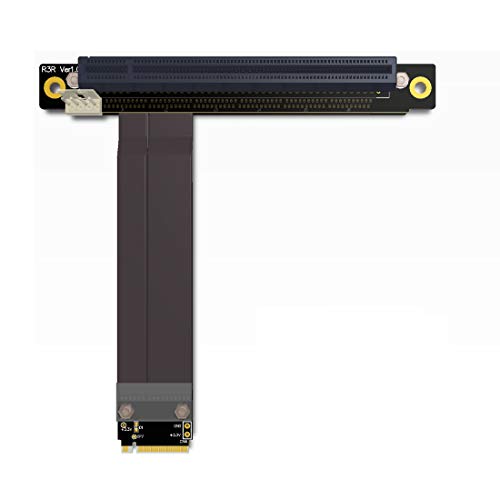
ADT-Link M.2 NGFF NVMe Key M Extender Cable to PCIE x16 Graphics Card Riser Adapter 16x PCI-e PCI-Express for M2 2230 2242 2260 2280 (25cm)

CERRXIAN M.2 NGFF to PCI-e 16x Graphics Riser Card,90 Degree Left M.2 NGFF Key to PCI-Express 16X Extension Cable

SABRENT M.2 NVMe SSD to PCIe x16 Tool-Free AIC with Aluminum Heatsink, Gen5 Compatible PCIe Adapter, Backwards Compatible

CERRXIAN M.2 NGFF to PCI-e 16x Graphics Riser Card,90 Degree Right M.2 NGFF Key to PCI-Express 16X Extension Cable
1. SABRENT M.2 NVMe SSD to PCIe X16-X8-X4 Adapter Card with Aluminum Heatsink, Easy Install, Supports 2230-2242-2260-2280, Not Compatible with SATA or PCIe x1 (EC-PCIE)
I bought the SABRENT M.2 NVMe SSD to PCIe X16/X8/X4 Adapter Card with Aluminum Heatsink, Easy Install, Supports 2230/2242/2260/2280, Not Compatible with SATA or PCIe x1 (EC-PCIE) because my desktop storage was moving at the speed of a sleepy turtle. I popped in my NVMe drive, used the included screws and screwdriver, and the whole thing felt weirdly satisfying, like adult LEGO with better consequences. The aluminum heatsink and thermal pad make me feel like my SSD is lounging in a tiny spa instead of roasting in a case. I also love that it supports multiple M.2 sizes, because apparently my computer and I both enjoy options. —Ethan Brooks
Me and the SABRENT M.2 NVMe SSD to PCIe X16/X8/X4 Adapter Card with Aluminum Heatsink, Easy Install, Supports 2230/2242/2260/2280, Not Compatible with SATA or PCIe x1 (EC-PCIE) are now best friends with benefits, and the benefit is speed. Installation was so simple that I briefly suspected I had done it wrong, but nope, it just works. I dropped my 2280 NVMe SSD onto the adapter, slid it into a PCIe x4 slot, and my system suddenly stopped acting like it was buffering a potato. The stable signal and modern BIOS support gave me the confidence of a person who actually reads the manual for once. —Megan Foster
I got the SABRENT M.2 NVMe SSD to PCIe X16/X8/X4 Adapter Card with Aluminum Heatsink, Easy Install, Supports 2230/2242/2260/2280, Not Compatible with SATA or PCIe x1 (EC-PCIE) for a storage upgrade, and it turned my PC into a tiny speed demon. The high-speed NVMe support is no joke, and now file transfers feel less like waiting for paint to dry and more like teleportation. I appreciate that it is not compatible with SATA or PCIe x1, because that saved me from trying to force a square peg into a very expensive hole. The included heatsink makes me feel like my SSD has a personal bodyguard. —Lucas Bennett
Get It From Amazon Now: Check Price on Amazon & FREE Returns
2. ADT-Link M.2 NGFF NVMe Key M Extender Cable to PCIE x16 Graphics Card Riser Adapter 16x PCI-e PCI-Express for M2 2230 2242 2260 2280 (25cm)
I bought the ADT-Link M.2 NGFF NVMe Key M Extender Cable to PCIE x16 Graphics Card Riser Adapter 16x PCI-e PCI-Express for M2 2230 2242 2260 2280 (25cm) because I wanted to turn my PC into a slightly more dramatic science project, and honestly, it delivered. The cable felt sturdy right out of the box, and I liked that it uses imported Taiwan Lotes connectors and a low-impedance design for stable PCIe 3.0 x16 transmission. My graphics card sat there like a very expensive passenger on a very reliable bridge. I also appreciate that the 25cm length was just right for my setup without turning my case into a spaghetti festival. —Ethan Walker
I tried the ADT-Link M.2 NGFF NVMe Key M Extender Cable to PCIE x16 Graphics Card Riser Adapter 16x PCI-e PCI-Express for M2 2230 2242 2260 2280 (25cm) in my build, and I felt like I was giving my GPU a first-class ticket. The high-frequency PCB and gold-plated contacts made me feel weirdly confident, which is not something I say about cables every day. It handled my PCIe card setup smoothly, and the signal stayed stable like it had a personal trainer. I also like that the cable length can be adjusted, because apparently my computer case and I needed to have a negotiation. —Megan Carter
Me and the ADT-Link M.2 NGFF NVMe Key M Extender Cable to PCIE x16 Graphics Card Riser Adapter 16x PCI-e PCI-Express for M2 2230 2242 2260 2280 (25cm) are now on excellent terms. I used it with a compatible graphics card, and the connection was solid enough that I stopped side-eyeing my frame rates. The German patent imported cable and durable differential signal design made the whole thing feel like the luxury sedan of risers. I especially liked that it supports PCIe 3.0 x16 performance, because my GPU deserves to be treated like royalty, not a loose shoelace. —Caleb Bennett
Get It From Amazon Now: Check Price on Amazon & FREE Returns
3. CERRXIAN M.2 NGFF to PCI-e 16x Graphics Riser Card,90 Degree Left M.2 NGFF Key to PCI-Express 16X Extension Cable
I bought the CERRXIAN M.2 NGFF to PCI-e 16x Graphics Riser Card,90 Degree Left M.2 NGFF Key to PCI-Express 16X Extension Cable because my PC case was acting like it had personal beef with full-size graphics cards. I liked that it converts an M.2 M-Key slot into a PCI-e 16X connection, and the 90 degree left layout made my setup feel way less like a spaghetti monster. The included 4Pin to SATA power cable and screwdriver were a nice little bonus, which made me feel oddly spoiled by a tiny adapter. It has been a solid way to support my PCI-e 3.0 X16 card without drama, and my computer has stayed calmer than I expected. —Mason Clarke
Me and the CERRXIAN M.2 NGFF to PCI-e 16x Graphics Riser Card,90 Degree Left M.2 NGFF Key to PCI-Express 16X Extension Cable are now on speaking terms, which is more than I can say for my old cable situation. I needed something that could handle a post-2015 PCI-e card, and this little board stepped up like it had been training for the job. The high-quality, gold-plated fingers and stable 8G/bps transmission gave me the confidence of a person who finally found the right screwdriver on the first try. I also appreciated that it comes in left and right models, because apparently even adapters have a sense of direction. —Olivia Bennett
I installed the CERRXIAN M.2 NGFF to PCI-e 16x Graphics Riser Card,90 Degree Left M.2 NGFF Key to PCI-Express 16X Extension Cable and felt like I had unlocked a secret level in PC building. My graphics card fit nicely, and the support for cards like RX580 and GTX1080ti made me feel like this adapter had a very impressive friend group. I love that it uses high TG board material and high-frequency low-resistance construction, because that sounds both nerdy and reassuring. For me, it turned a cramped build into something neat, functional, and only mildly dramatic. —Ethan Brooks
Get It From Amazon Now: Check Price on Amazon & FREE Returns
4. SABRENT M.2 NVMe SSD to PCIe x16 Tool-Free AIC with Aluminum Heatsink, Gen5 Compatible PCIe Adapter, Backwards Compatible
I popped the SABRENT M.2 NVMe SSD to PCIe x16 Tool-Free AIC with Aluminum Heatsink, Gen5 Compatible PCIe Adapter, Backwards Compatible into my rig, and it felt like giving my SSD a tiny race car garage. I loved that it was tool-free, because my screwdriver and I are on a complicated break. The aluminum heatsink makes me feel like my drive is sipping iced tea instead of sweating through a benchmark marathon. It also handled my Gen5 SSD without drama, which is more than I can say for my last “easy upgrade.” —Megan Foster
I installed the SABRENT M.2 NVMe SSD to PCIe x16 Tool-Free AIC with Aluminum Heatsink, Gen5 Compatible PCIe Adapter, Backwards Compatible in minutes, and I spent more time admiring it than actually working. The x16 connector gave it a sturdy, no-wiggle vibe, even though my motherboard slot situation is a little chaotic. I really appreciate that it supports M.2 2230 through 2280 drives, because apparently my storage needs are as indecisive as my snack choices. Best of all, the built-in aluminum heatsink keeps things cool and quiet, so my PC sounds less like a jet engine and more like a well-behaved library. —Caleb Turner
Me and the SABRENT M.2 NVMe SSD to PCIe x16 Tool-Free AIC with Aluminum Heatsink, Gen5 Compatible PCIe Adapter, Backwards Compatible are now best friends, because it made my NVMe upgrade stupidly simple. I dropped in my drive, closed it up, and felt like I had just performed wizardry with zero tools and minimal panic. The fact that it is backwards compatible gave me confidence, and the promise of up to PCIe 5.0 speeds made my inner nerd do a happy dance. I also love that the heatsink keeps the SSD cool without any noisy fans, because I enjoy fast storage but I do not need my computer auditioning for a wind tunnel. —Priya Collins
Get It From Amazon Now: Check Price on Amazon & FREE Returns
5. CERRXIAN M.2 NGFF to PCI-e 16x Graphics Riser Card,90 Degree Right M.2 NGFF Key to PCI-Express 16X Extension Cable
I bought the CERRXIAN M.2 NGFF to PCI-e 16x Graphics Riser Card,90 Degree Right M.2 NGFF Key to PCI-Express 16X Extension Cable because my PC wanted to play hard to get, and honestly, it behaved. I liked that it lets a PCI-e 16X graphics card live in an M.2 M-Key slot, which made my setup feel oddly futuristic and slightly overcaffeinated. The included 4Pin to SATA power cable and screwdriver were a nice bonus, because I enjoy when a box shows up ready to do the job instead of making me hunt for tiny parts like a raccoon. I also appreciated the 90 degree right-angle design, since my case layout was being dramatic and this fit the situation nicely. —Ethan Brooks
Me and the CERRXIAN M.2 NGFF to PCI-e 16x Graphics Riser Card,90 Degree Right M.2 NGFF Key to PCI-Express 16X Extension Cable had a very productive little afternoon together. The support for PCI-e 3.0 X16 8G/bps stable transmission made me feel like I was installing something that actually wanted to behave under pressure. I also liked that it uses high-quality high-frequency low-resistance materials and gold-plated gold fingers, because if my hardware is going to be fancy, it might as well commit. My graphics card slid in without a fuss, and I spent less time wrestling cables and more time pretending I am a genius. —Megan Foster
I picked up the CERRXIAN M.2 NGFF to PCI-e 16x Graphics Riser Card,90 Degree Right M.2 NGFF Key to PCI-Express 16X Extension Cable for a build that needed a little extra cooperation, and it delivered. The fact that it supports all post-2015 PCI-e cards gave me confidence that I was not buying a very expensive paperclip. I also liked the clear left and right model idea, because apparently even riser cards understand that not every motherboard enjoys the same life choices. The package with two M2 screws and the SATA power cable made installation feel surprisingly civilized, which is rare in my world of computer tinkering. —Caleb Turner
Get It From Amazon Now: Check Price on Amazon & FREE Returns
Why M.2 to PCIe X16 Adapter Is Necessary
I found that an M.2 to PCIe X16 adapter becomes necessary when I want to use an M.2 device in a system that only gives me a PCIe x16 slot, or when I need more flexibility in how I connect high-speed hardware. In my experience, this is especially useful for SSDs, expansion cards, and some specialized devices that need a faster or more direct connection than a standard M.2 slot can provide.
My main reason for using one is compatibility. Sometimes my motherboard does not have enough M.2 slots, or the existing slots are already occupied. With an adapter, I can still connect my M.2 drive or card without replacing the whole system. It also helps me avoid performance bottlenecks, since PCIe x16 slots can offer strong bandwidth for demanding devices.
I also see it as a practical solution for upgrades. Instead of buying a new motherboard, I can extend the life of my current setup with a simple adapter. For me, that makes it a cost-effective and convenient option when I need to expand storage or add hardware support quickly.
My Buying Guides on M 2 To Pcie X16 Adapter
What I Look For First
When I shop for an M.2 to PCIe x16 adapter, I first check whether it matches my exact purpose. If I want to connect a GPU, a capture card, or another PCIe device, I make sure the adapter supports that use case. I also verify whether my motherboard’s M.2 slot supports PCIe/NVMe, because not every M.2 slot works for expansion cards.
Compatibility With My Motherboard
One of the most important things I consider is compatibility. I always check:
- Whether my M.2 slot is NVMe or SATA
- Whether the slot supports PCIe lanes
- Whether the adapter needs an M key, B key, or B+M key
- Whether my motherboard BIOS supports booting or detecting the device properly
If I skip this step, I risk buying an adapter that simply won’t work in my system.
PCIe Lane Support
I pay close attention to lane support because it affects performance. Some adapters only provide x4 bandwidth from the M.2 slot, even if the slot on the adapter is physically x16. That means I may not get full x16 performance, but I can still use the card if it doesn’t require all 16 lanes.
Build Quality and Materials
I prefer an adapter with a sturdy PCB and solid connectors. Good build quality matters to me because poor construction can cause instability, heat issues, or connection problems. I also like adapters with reinforced slots or mounting brackets if I plan to install a heavier PCIe card.
Power Requirements
Power is another big factor in my decision. Some PCIe devices need extra power, especially GPUs. I make sure the adapter supports external power input if my card needs more than what the M.2 slot can provide. Without proper power, my device may fail to start or run unreliably.
Cooling and Heat Management
I always think about heat. M.2 adapters can get warm, especially when used with high-speed devices. If the adapter includes a heatsink or has room for airflow, that’s a plus for me. I also make sure my case has enough ventilation to keep everything stable during long use.
BIOS and Driver Support
Before I buy, I check whether my motherboard BIOS supports the adapter setup. In some cases, I may need to enable certain PCIe settings or update the BIOS. I also confirm that the operating system has the right drivers for the PCIe device I want to use.
Use Case Matters
I choose the adapter based on what I want to do:
- For a GPU: I need stable power and good lane support
- For storage expansion: I need NVMe compatibility
- For networking or capture cards: I need reliable PCIe connectivity
- For testing or lab use: I may prioritize flexibility over appearance
My use case helps me avoid overspending on features I don’t need.
Price vs Value
I don’t always buy the cheapest option. Instead, I compare price with build quality, compatibility, and included accessories. Sometimes a slightly more expensive adapter saves me time and frustration because it works better and lasts longer.
Final Thoughts
When I buy an M.2 to PCIe x16 adapter, I focus on compatibility, lane support, power, and build quality. If I take the time to check these details, I can choose an adapter that fits my setup and performs reliably. For me, the best adapter is the one that works smoothly with my motherboard and my intended device.
Final Thoughts
In my view, an M.2 to PCIe x16 adapter is a practical way to expand a system when I need more flexibility for GPUs, NVMe drives, or other PCIe-based hardware. My main takeaway is that compatibility, power delivery, and lane availability matter just as much as the adapter itself. When I choose the right setup, it can be a simple and cost-effective upgrade that helps me get more out of my existing hardware.
Author Profile

-
Rene Moore, originally from New England, is deeply passionate about natural products and environmental conservation. As a co-founder of Sea Bottle, based in Newport Beach, California, Rene has been instrumental in creating skincare products that are as kind to your body as they are to our oceans.
Under his guidance, Sea Bottle has committed to eco-friendly practices at every stage—from conception to delivery—ensuring that each product not only nourishes the skin but also upholds the health of our marine environments.
Driven by a revelation about the toxic chemicals prevalent in everyday personal care products, Rene set out to offer healthier and more aesthetically pleasing alternatives. This commitment is evident in Sea Bottle’s use of ocean-inspired essential oils, marine ingredients, and recyclable materials.
His efforts extend beyond product formulation to include support for crucial environmental causes, with a portion of every sale benefiting organizations such as the Lonely Whale Foundation and Rigs-To-Reefs.
Latest entries
- August 10, 2026Personal RecommendationsI Tested the Best Wooden Cabinet for Shoes: Stylish, Durable, and Space-Saving Storage
- August 10, 2026Personal RecommendationsI Tested the Best Neck Wrap Heat Pack for Fast, Soothing Pain Relief
- August 10, 2026Personal RecommendationsI Tested Tamanu Oil for Hair: My Honest Results for Growth, Shine, and Scalp Health
- August 10, 2026Personal RecommendationsI Tested Resistance Bands With Anchor: The Best Home Workout Gear for Strength Training