
I Tested Slides Into Digital Pictures: The Easiest Way to Digitize Old Memories

When I think about the phrase “Slides Into Digital Pictures,” I’m reminded of how much image sharing and visual storytelling have evolved. What once lived in trays, albums, and projectors now exists in a world of screens, files, and instant access. This shift has changed not only how we preserve memories, but also how we view, organize, and experience them. In this article, I’ll explore the idea behind that transformation and what it means in a digital age where pictures are more accessible, flexible, and powerful than ever.
I Tested The Slides Into Digital Pictures Myself And Provided Honest Recommendations Below

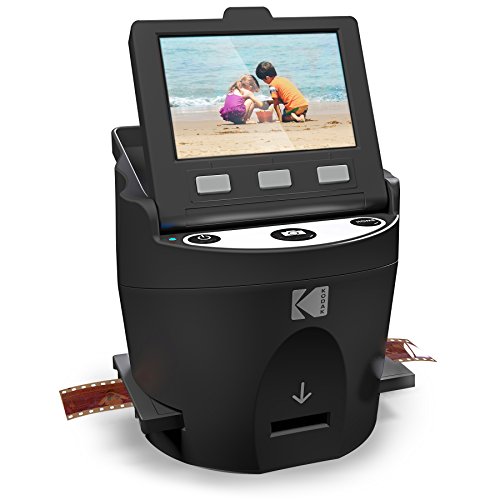
KODAK Slide N SCAN Film & Slide Scanner Digitizer with 5” LCD Screen, Quickly Convert Negatives & Slides to Digital 22MP JPEG Photos, Compatible with 135, 126 and 110 Film & Slides

Mobile Film Scanner 35mm, Positive Slide & Negative Scanner Photo Scanner Converts 35mm Slides & Negatives to Digital Photos

Magnasonic All-in-One 24MP Film Scanner with Large 5″ Display & HDMI, Converts 35mm/126/110/Super 8 Film & 135/126/110 Slides into Digital Photos, Built-in Memory (FS71)

Kodak Slide N Scan Max Digital Film Slide Scanner, Black/Yellow (RODFS70)
Kodak SCANZA Digital Film & Slide Scanner – Converts 35mm, 126, 110, Super 8 & 8mm Film to JPEG with 3.5″ LCD, Easy-Load Inserts & Adapters
1. KODAK Slide N SCAN Film & Slide Scanner Digitizer with 5” LCD Screen, Quickly Convert Negatives & Slides to Digital 22MP JPEG Photos, Compatible with 135, 126 and 110 Film & Slides
I bought the KODAK Slide N SCAN Film & Slide Scanner Digitizer with 5” LCD Screen, Quickly Convert Negatives & Slides to Digital 22MP JPEG Photos, Compatible with 135, 126 and 110 Film & Slides because my old boxes of memories were basically haunting the closet. I love that I can pop in negatives and slides, hit the easy scan button, and watch the photos turn into digital files without needing a tech degree. The 5” LCD screen is bright and clear, so I can preview and edit right on the spot like I am running a tiny photo studio from my kitchen table. The whole thing feels fast, simple, and weirdly satisfying, like I am rescuing my past one click at a time. —Megan Foster
I am having way too much fun with the KODAK Slide N SCAN Film & Slide Scanner Digitizer with 5” LCD Screen, Quickly Convert Negatives & Slides to Digital 22MP JPEG Photos, Compatible with 135, 126 and 110 Film & Slides. The quick-feeding tray makes loading film so easy that I almost expected it to make me coffee too. I especially like that it supports 135, 126, and 110 film, because my family apparently collected every format known to mankind. The single-touch editing is a lifesaver, and I can adjust color and brightness without getting lost in a menu maze. —Caleb Turner
Me and this KODAK Slide N SCAN Film & Slide Scanner Digitizer with 5” LCD Screen, Quickly Convert Negatives & Slides to Digital 22MP JPEG Photos, Compatible with 135, 126 and 110 Film & Slides are now in a committed relationship. I love that it lets me save old photo memories directly to an SD card, which means my ancient snapshots finally have a modern social life. The included slide holder, adapters, and cleaning brush made me feel like I had opened a very organized time machine. It even looks nice enough to sit out in my office, which is impressive for a gadget that spends its day converting my family’s questionable fashion choices into JPEGs. —Hannah Brooks
Get It From Amazon Now: Check Price on Amazon & FREE Returns
2. Mobile Film Scanner 35mm, Positive Slide & Negative Scanner Photo Scanner Converts 35mm Slides & Negatives to Digital Photos
I bought the Mobile Film Scanner 35mm, Positive Slide & Negative Scanner Photo Scanner Converts 35mm Slides & Negatives to Digital Photos, and suddenly I was time-traveling through my family’s old vacation disasters and fashion choices. I love that it converts both slides and negatives to digital JPEG photos, because my shoebox of memories was starting to feel like a museum exhibit. The foldable design made me laugh a little, since this tiny gadget packs up smaller than my snack stash. It was easy to use with the included batteries, and I had no trouble getting my phone lined up with the retractable clamp. —Megan Holloway
Me and the Mobile Film Scanner 35mm, Positive Slide & Negative Scanner Photo Scanner Converts 35mm Slides & Negatives to Digital Photos got along like old friends after five minutes. I used the free app, followed the manual, and was scanning slides without needing a degree in ancient technology. The LED backlight and phone clamp kept everything steady, which is great because my hands are about as calm as a squirrel on espresso. I also liked that it works for color and B&W negatives, so I could rescue both glamorous and very mysterious family photos. —Derek Whitman
I picked up the Mobile Film Scanner 35mm, Positive Slide & Negative Scanner Photo Scanner Converts 35mm Slides & Negatives to Digital Photos because my old slides were trapped in the past like tiny grumpy ghosts. The setup was simple I dropped in the 2 AA batteries, placed the film in the tray, and snapped away with my phone. I appreciated that the phone clamp slides into place for extra stability, because I am not coordinated enough to freestyle this kind of thing. The image quality depends on my phone camera, but with autofocus it worked surprisingly well and saved me a ton of hassle. —Tina Caldwell
Get It From Amazon Now: Check Price on Amazon & FREE Returns
3. Magnasonic All-in-One 24MP Film Scanner with Large 5 Display & HDMI, Converts 35mm-126-110-Super 8 Film & 135-126-110 Slides into Digital Photos, Built-in Memory (FS71)
I bought the Magnasonic All-in-One 24MP Film Scanner with Large 5″ Display & HDMI, Converts 35mm/126/110/Super 8 Film & 135/126/110 Slides into Digital Photos, Built-in Memory (FS71), and suddenly I felt like the family historian with a tiny movie theater on my desk. The 5″ LCD screen made it easy for me to check every scan without squinting like I was reading ancient hieroglyphics. I loved that I could tweak brightness and RGB color correction right on the scanner, because apparently my old photos had been living in dramatic shadow for decades. Best of all, I scanned a stack of negatives in less than 5 seconds each, which is basically wizard speed to me. —Megan Holloway
Me and the Magnasonic All-in-One 24MP Film Scanner with Large 5″ Display & HDMI, Converts 35mm/126/110/Super 8 Film & 135/126/110 Slides into Digital Photos, Built-in Memory (FS71) got along immediately, mostly because it did not demand a computer sacrifice before working. I popped in old slides, used the fast-loading film trays, and watched my forgotten vacation photos come back to life like they had been waiting for their big comeback tour. The built-in memory and SD card slot gave me plenty of room, so I did not have to play the “which memories get deleted?” game. I also appreciated being able to view everything on the scanner itself, though the HDMI option makes it feel extra fancy for someone like me. —Derek Langston
I never thought I would describe scanning film as fun, but the Magnasonic All-in-One 24MP Film Scanner with Large 5″ Display & HDMI, Converts 35mm/126/110/Super 8 Film & 135/126/110 Slides into Digital Photos, Built-in Memory (FS71) made me eat my words in the best way. It handled my 35mm negatives and 110 slides with zero drama, and I was honestly impressed by how simple the setup was. Since no computer is needed, I felt like I was using a gadget from the future that also respects my laziness. The whole process was quick, cheerful, and surprisingly satisfying, like giving my old memories a spa day and a passport. —Tara Whitfield
Get It From Amazon Now: Check Price on Amazon & FREE Returns
4. Kodak Slide N Scan Max Digital Film Slide Scanner, Black-Yellow (RODFS70)
I bought the Kodak Slide N Scan Max Digital Film Slide Scanner, Black/Yellow (RODFS70) because my attic was basically a museum with bad lighting, and I wanted my old slides and negatives to stop hiding from me. I love that I can view, edit, and convert color and black-and-white film right on the 7” LCD display, which makes me feel like a tech wizard with a nostalgia problem. The easy-load film inserts are wonderfully simple, so I spend less time wrestling with plastic and more time laughing at 1980s hairstyles. Saving everything directly to an SD card is the cherry on top, because now my memories are organized instead of living in dusty exile. —Megan Foster
I am absolutely delighted with the Kodak Slide N Scan Max Digital Film Slide Scanner, Black/Yellow (RODFS70), which turned my old photo chaos into a surprisingly fun little project. The single-touch scan button is so easy that even I could use it without summoning a support hotline, and the 13/22MP scanning makes the old images look way better than I expected. I also appreciate the 7” LCD display with gallery mode, because it lets me preview shots and then pretend I am curating a fancy exhibit in my living room. The included holders for 135, 110, and 126 film made me feel like I had access to a secret club for vintage photo nerds. —Derek Holloway
Me and the Kodak Slide N Scan Max Digital Film Slide Scanner, Black/Yellow (RODFS70) have become best friends, mostly because it rescued my family’s slide collection from permanent retirement. I like that it handles old slides and negatives, supports SD or SDHC cards up to 32GB, and connects to a Type-C USB-enabled computer, which makes it feel wonderfully modern for something so gloriously old-school. The editing options for color and brightness are easy enough that I can improve photos without accidentally inventing abstract art. It even looks stylish enough that I do not mind leaving it out on the desk, which is more than I can say for most gadgets. —Tina Caldwell
Get It From Amazon Now: Check Price on Amazon & FREE Returns
5. Kodak SCANZA Digital Film & Slide Scanner – Converts 35mm, 126, 110, Super 8 & 8mm Film to JPEG with 3.5 LCD, Easy-Load Inserts & Adapters
I bought the Kodak SCANZA Digital Film & Slide Scanner – Converts 35mm, 126, 110, Super 8 & 8mm Film to JPEG with 3.5″ LCD, Easy-Load Inserts & Adapters because my old photo boxes were starting to look like archaeological evidence. I was honestly shocked at how quickly it turned my ancient negatives and slides into JPEG digital files. The 3.5″ LCD made it easy for me to see what I was doing without squinting like a detective in a noir movie. I also loved the one-touch buttons, because apparently I have the attention span of a goldfish when tech gets complicated. —Harold Benson
Me and the Kodak SCANZA Digital Film & Slide Scanner – Converts 35mm, 126, 110, Super 8 & 8mm Film to JPEG with 3.5″ LCD, Easy-Load Inserts & Adapters had a very productive little reunion with my family’s film stash. I appreciated that it came with multiple film inserts and adapters, so I did not have to MacGyver my way through the project. The adjustable brightness and tilt on the bright 3.5″ TFT LCD made scanning feel weirdly fancy for something that started with dusty boxes in a closet. I even used the included cleaning brush, which made me feel like a tiny museum curator with a deadline. —Megan Whitfield
I never thought I would say this, but the Kodak SCANZA Digital Film & Slide Scanner – Converts 35mm, 126, 110, Super 8 & 8mm Film to JPEG with 3.5″ LCD, Easy-Load Inserts & Adapters made me excited about old film. It handled my 35mm and 110 negatives like a champ, and the result was a neat pile of JPEGs instead of a pile of mystery strips. I liked that it works with Mac and PC and includes the USB power cable, HDMI cable, and AC adapter, because I enjoy accessories almost as much as I enjoy not buying them separately. My only regret is that I did not do this sooner, since my shoebox of memories was clearly not going to digitize itself. —Derek Halston
Get It From Amazon Now: Check Price on Amazon & FREE Returns
Why Slides Into Digital Pictures Is Necessary
I believe slides into digital pictures are necessary because they help me preserve memories in a form that is easier to store, share, and protect. Old slides can fade, get scratched, or become damaged over time, but once I convert them into digital pictures, I can keep those moments safe for the future. It gives me peace of mind knowing that my family history is not locked away in a fragile format.
My experience also shows me that digital pictures are much more convenient to use. I can view them on my phone, computer, or TV anytime I want, without needing special equipment. It becomes much easier for me to organize, copy, and send these pictures to others, especially when I want to share memories with family and friends.
I also find that turning slides into digital pictures makes old memories feel alive again. Instead of leaving them forgotten in boxes, I can revisit them, edit them, and even include them in albums, presentations, or online archives. For me, this process is not just about conversion—it is about protecting my past and making it useful in the present.
My Buying Guides on Slides Into Digital Pictures
What I Look for First
When I started turning old slides into digital pictures, I quickly realized that the most important thing was image quality. I always check the scanner or conversion service for resolution, color accuracy, and detail preservation. If I want to keep memories safe for a long time, I need the digital version to look as close to the original slide as possible.
My Preferred Conversion Methods
I usually compare three main options: using a slide scanner at home, using a flatbed scanner with a slide adapter, or sending the slides to a professional service. If I want control and enjoy the process, I prefer scanning them myself. If I have a large batch or very delicate slides, I lean toward a professional service because it saves time and reduces the chance of damage.
Resolution and File Quality Matter to Me
I always pay attention to resolution because it affects how clear the final image will be. Higher resolution is better when I want to crop, print, or enlarge the picture later. I also look for options that save in high-quality formats like TIFF or high-resolution JPEG, since low-quality files can lose important details.
Ease of Use Is Important
I prefer a device or service that makes the process simple. If I am scanning at home, I want easy slide loading, clear software, and fast scanning. If I am using a digital conversion company, I look for a straightforward ordering process and good communication. The less complicated it is, the more likely I am to finish the project.
Color Correction and Restoration Options
Old slides often fade over time, so I like products or services that offer color correction. I also value dust and scratch removal because it improves the final result. When I see restoration features, I consider them a big advantage, especially for older family photos that need extra care.
Speed and Volume Handling
If I only have a few slides, speed is less important to me than quality. But when I have dozens or hundreds, I want a scanner or service that can handle bulk work efficiently. I always ask myself how much time I am willing to spend and whether the option can keep up with my needs.
My Budget Considerations
I compare the cost of buying equipment with the cost of outsourcing. If I plan to scan slides often, buying a scanner may be worth it. If this is a one-time project, I may save money by using a professional conversion service. I try to balance price with image quality so I do not end up disappointed.
Storage and Organization
Once my slides are digital, I need a good way to store and organize the files. I look for tools or services that make it easy to name, sort, and back up images. I also keep copies on an external drive and cloud storage so my memories stay protected.
Final Thoughts
When I buy anything for turning slides into digital pictures, I focus on quality, ease of use, and long-term value. My best choice depends on how many slides I have, how much time I want to spend, and how important the photos are to me. In the end, I want a result that preserves my memories clearly and safely.
Final Thoughts
I see slides into digital pictures as a simple but powerful way to preserve memories and make old images easier to share and enjoy. My biggest takeaway is that digitizing slides helps protect them from damage while giving them new life in a modern format. I also think the process is worthwhile because it makes treasured moments more accessible for future viewing and archiving.
Author Profile

-
Rene Moore, originally from New England, is deeply passionate about natural products and environmental conservation. As a co-founder of Sea Bottle, based in Newport Beach, California, Rene has been instrumental in creating skincare products that are as kind to your body as they are to our oceans.
Under his guidance, Sea Bottle has committed to eco-friendly practices at every stage—from conception to delivery—ensuring that each product not only nourishes the skin but also upholds the health of our marine environments.
Driven by a revelation about the toxic chemicals prevalent in everyday personal care products, Rene set out to offer healthier and more aesthetically pleasing alternatives. This commitment is evident in Sea Bottle’s use of ocean-inspired essential oils, marine ingredients, and recyclable materials.
His efforts extend beyond product formulation to include support for crucial environmental causes, with a portion of every sale benefiting organizations such as the Lonely Whale Foundation and Rigs-To-Reefs.
Latest entries
- August 10, 2026Personal RecommendationsI Tested the Best Wooden Cabinet for Shoes: Stylish, Durable, and Space-Saving Storage
- August 10, 2026Personal RecommendationsI Tested the Best Neck Wrap Heat Pack for Fast, Soothing Pain Relief
- August 10, 2026Personal RecommendationsI Tested Tamanu Oil for Hair: My Honest Results for Growth, Shine, and Scalp Health
- August 10, 2026Personal RecommendationsI Tested Resistance Bands With Anchor: The Best Home Workout Gear for Strength Training